
Teaching Kids About Ramadan Before They're Old Enough to Fast

Updated: 3 days ago
Children are not required to fast until puberty. Every school of Islamic thought agrees on that, which means the years before it are not a waiting room. They are the years a child decides whether Ramadan feels like a month they belong to or a month that happens to the adults around them.
Here is what actually works with toddlers and young children, and none of it involves skipping meals.
Start with the calendar, not the fast
Young children have almost no grip on a month. What they do understand is a countdown. A paper chain with thirty links, a moon chart on the fridge, a jar with thirty marbles that moves one across each evening — anything that gives the month a visible shape. The point is that Ramadan arrives as something anticipated rather than something that shows up and changes dinner.
Give them a job
A three-year-old cannot fast, but a three-year-old can absolutely be the person who puts the dates on the table before maghrib. Small, repeated, non-negotiable jobs do more than explanation: filling the water glasses, carrying the plate to the neighbour, dropping a coin in the charity jar each evening, being the one who says Bismillah before everyone eats. Ownership beats instruction at that age.
What a practice fast actually looks like
Older children often want to try, and the standard advice from paediatricians is to let them do it partially rather than all or nothing. That might be fasting until lunch, or giving up one specific thing — sweets, or snacks between meals — for the day. Children's National recommends that the child take part in the decision, that suhoor include protein and fibre rather than sugar, and that heavy exercise be avoided on fasting days. A half day completed feels like an achievement. A full day abandoned at 2pm feels like failure, and children remember which one it was.
Mark the firsts
First Ramadan, first fast, first Eid. These are worth photographing and worth having an object attached to, because a child who has a picture of themselves at their first Eid has a memory they can hold. The My First Ramadan onesie and the My First Eid onesie exist for exactly that photograph.
Let the house change
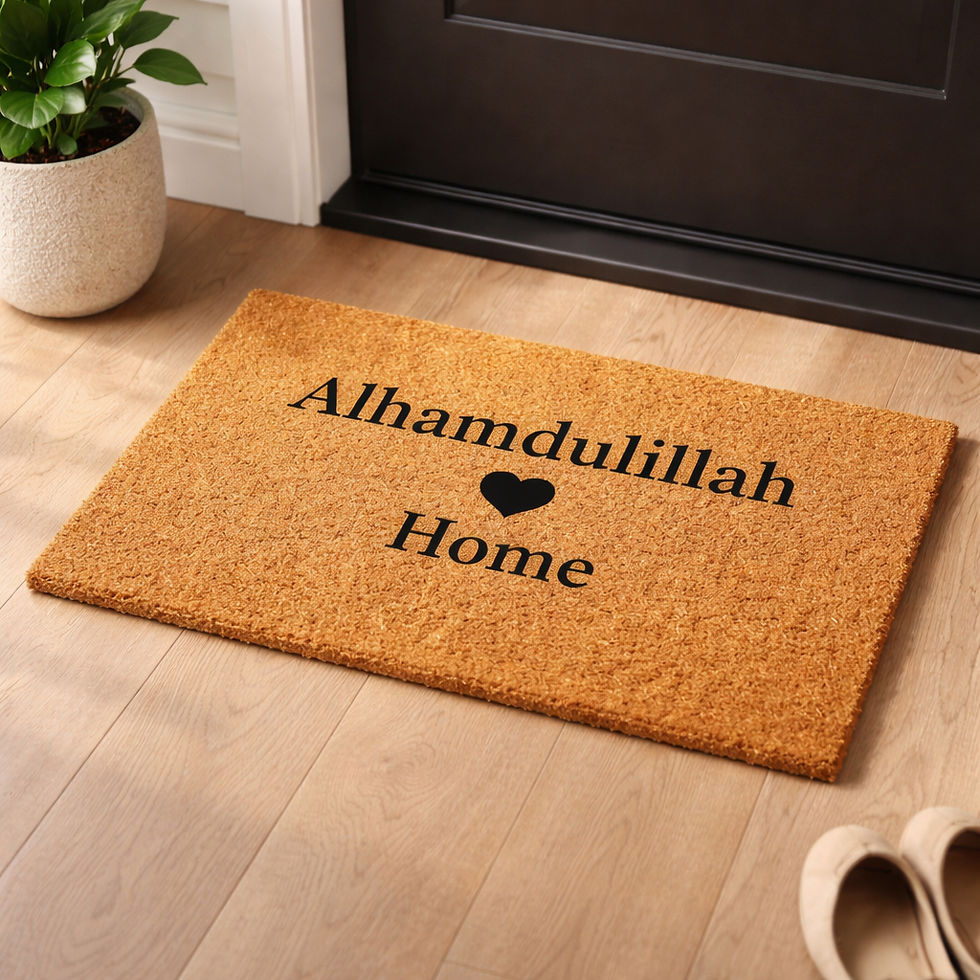
Children read the house before they read the explanation. If the front door, the table and the smell of the place all change for a month, the month means something. Lanterns and a garland do most of the work, and small permanent things help too — an Eid Mubarak doormat that comes out every year, a Ramadan candle lit at iftar, a Bismillah teddy bear that sleeps in the cot for thirty nights.
Let them wear it
This sounds trivial and is not. A child in a Ramadan Vibes t-shirt at nursery, or carrying a Start with Bismillah backpack to school, is a child being asked about it by their friends — and answering. For kids growing up as the only Muslim family on the street, that is often the moment the month stops being a private thing done at home.
The full range is in the kids collection.
We also keep a guide to gifts for the Bangladeshi friend who has everything if you are buying for the grown-ups too, and everything we make sits in the Peace Greet shop.

Comments